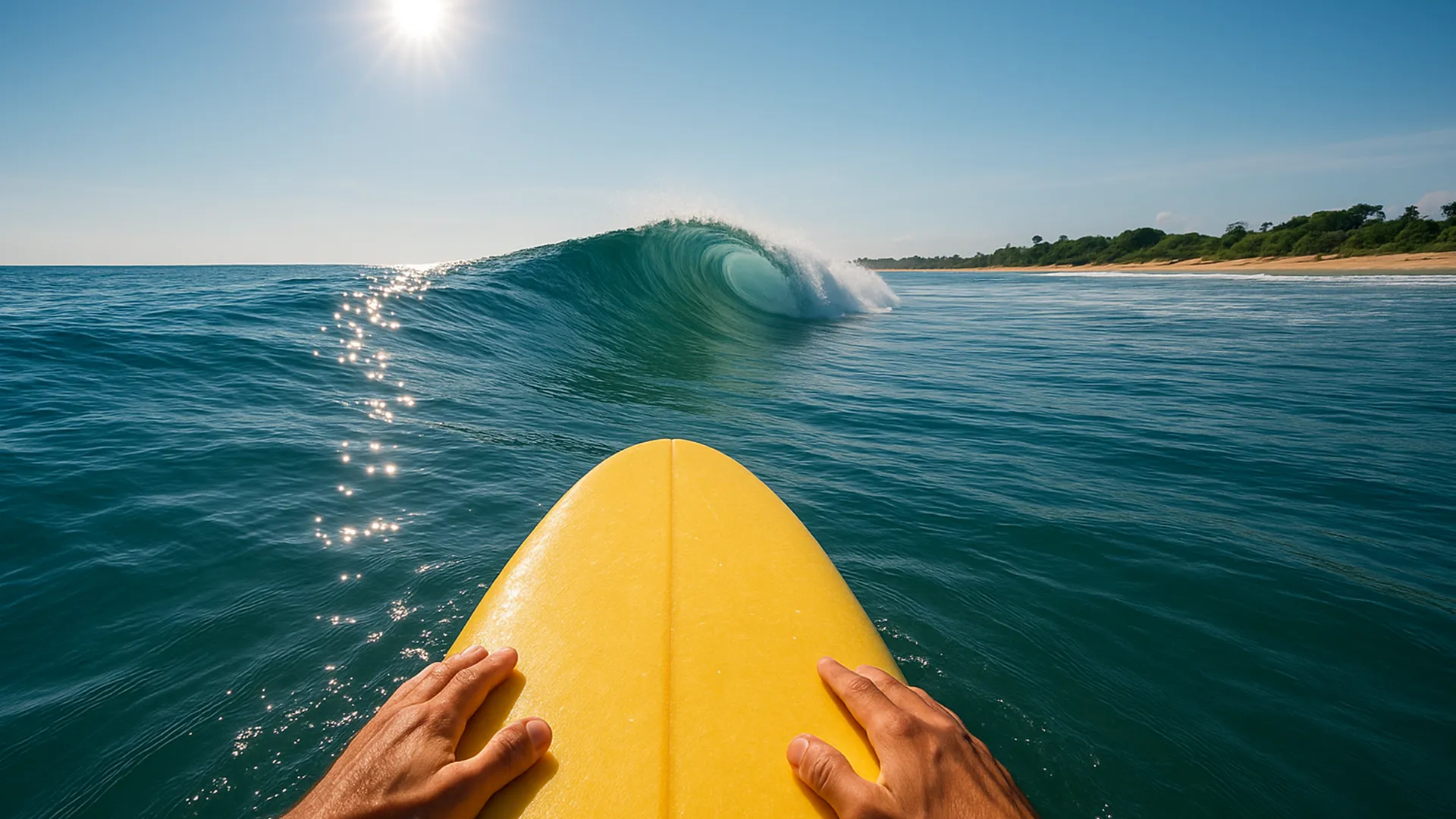
So, you’ve decided to take the plunge. You’ve seen the photos of perfect, peeling waves and sun-drenched beaches, and you’ve booked your spot at a surf camp in Arugam Bay, Sri Lanka’s legendary point break Mecca. Excitement is high, but so might be a little nervousness. What does a day in the life of a surf novice in this surfer’s paradise actually look like? Leave your expectations at the door and get ready for a journey that is equal parts challenging, hilarious, and ultimately, incredibly rewarding.
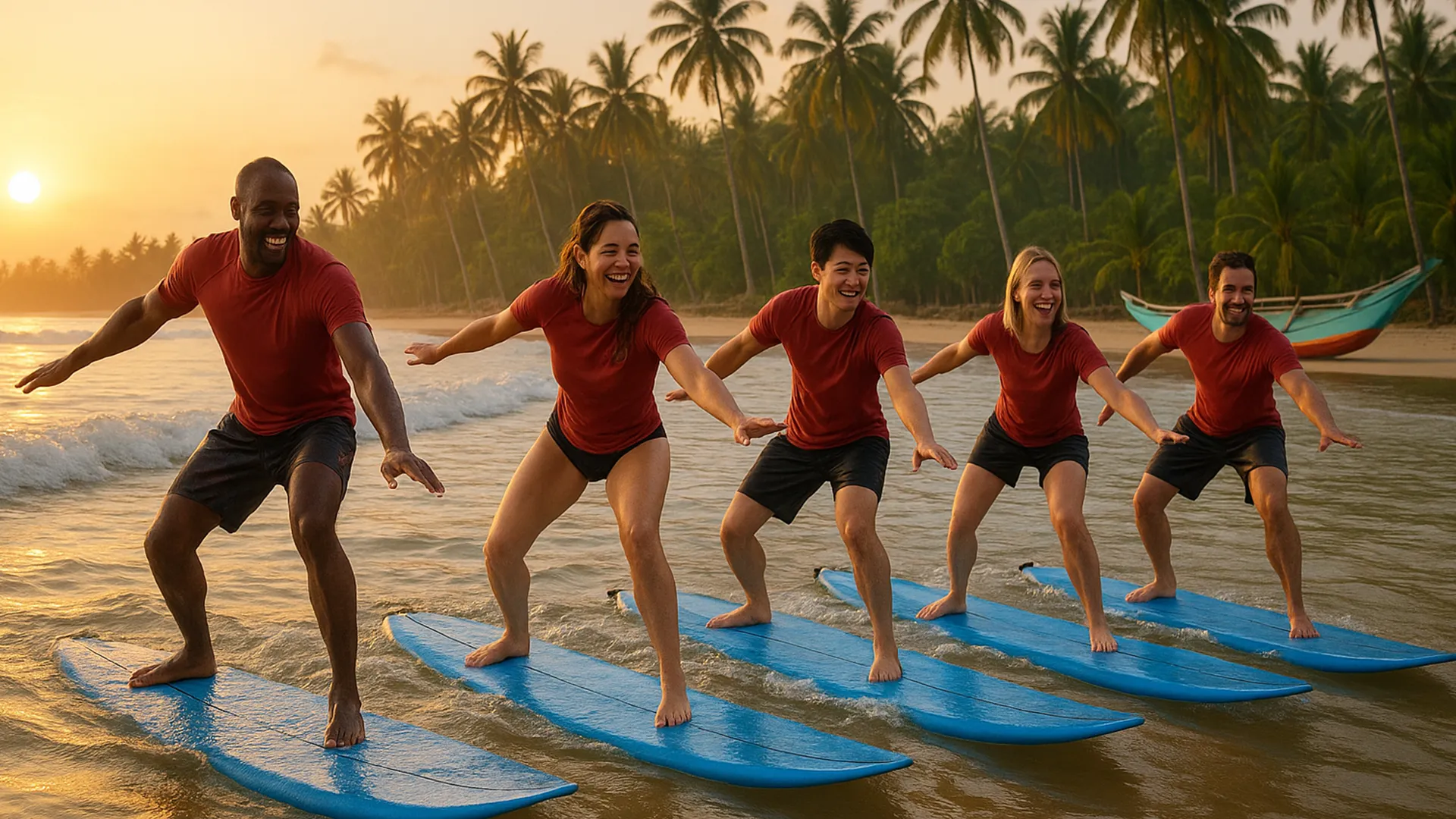
Your first day will likely begin with a mixture of anticipation and jet lag. Arugam Bay is not a bustling city; it’s a long, lazy strip of sand backed by dusty roads, cozy cafes, and guesthouses nestled among the palms. The vibe is immediately laid-back. You’ll meet your instructors - often deeply tanned, endlessly patient local surfers who have spent their lives in this water. They’ve seen every kind of "kook" (an affectionate term for a beginner) and know exactly how to guide you. The first lesson, crucially, is on land. You’ll be on your board in the sand, practicing the pop-up. It looks simple when they do it. It feels anything but when you try. You’ll wobble, you’ll put your hands in the wrong place, and you’ll probably collapse in a heap of laughter. This is all part of the process. This repetition is building muscle memory that will, eventually, kick in when you’re in the water.
Then comes the moment of truth. You’ll carry your soft-top board (which suddenly feels enormous) into the warm, bath-like Indian Ocean. At a beginner-friendly spot like Peanut Farm or Pottuvil Point, the water is often waist-deep and the waves are small and crumbly, perfect for learning. Your instructor will be right there with you, guiding you onto waves. The initial feeling is one of controlled chaos. There’s the frantic paddling as they yell “Go! Go! Go!”, the sudden feeling of the wave catching the board, and then the frantic scramble to remember everything you practiced on the beach. Your first successful stand-up is a lightning bolt of euphoria. It might only last for two seconds before you unceremoniously tumble into the water, but those two seconds are addictive. You’ll spend the rest of the session chasing that feeling again.
The aftermath of your first surf is a unique sensation. You will use muscles you never knew you had. Your shoulders will ache from paddling, your ribs might be tender from the board, and you’ll have likely drunk half the ocean. But you’ll also have a huge, stupid grin on your face that won’t fade for hours. The rest of the day is for recovery and soaking in the Arugam Bay culture. This means eating. You will be ravenous. Thankfully, the main street is a lineup of incredible, cheap eateries. You’ll devour massive plates of rice and curry, fresh fruit smoothies, and wood-fired pizzas, swapping stories with other camp attendees about your wipeouts and tiny victories.
The culture of Arugam Bay is a character in itself. Evenings are slow and social. You might lounge on oversized cushions at a beachfront bar, watching the advanced surfers get their last waves in the golden sunset light. You’ll listen to reggae music, play a game of carrom, and feel the gentle rhythm of village life. The sense of community is instant. You’re all there for the same reason, and that shared purpose creates fast friends. By the end of your stay, you’ll be reading the tide charts, understanding the difference between a left and a right break, and paddling out with a bit more confidence. You’ll leave with a new skillset, a body full of bruises you wear like badges of honor, and a profound respect for the ocean and the sport. You arrived a kook, and you’ll leave a surfer, already dreaming of your next wave.
Powered by Froala Editor
Related Insights & Articles
September 18th 2025
Tuk-Tuk Tales: Conquering the Coast in Sri Lanka's Iconic Three-Wheeler
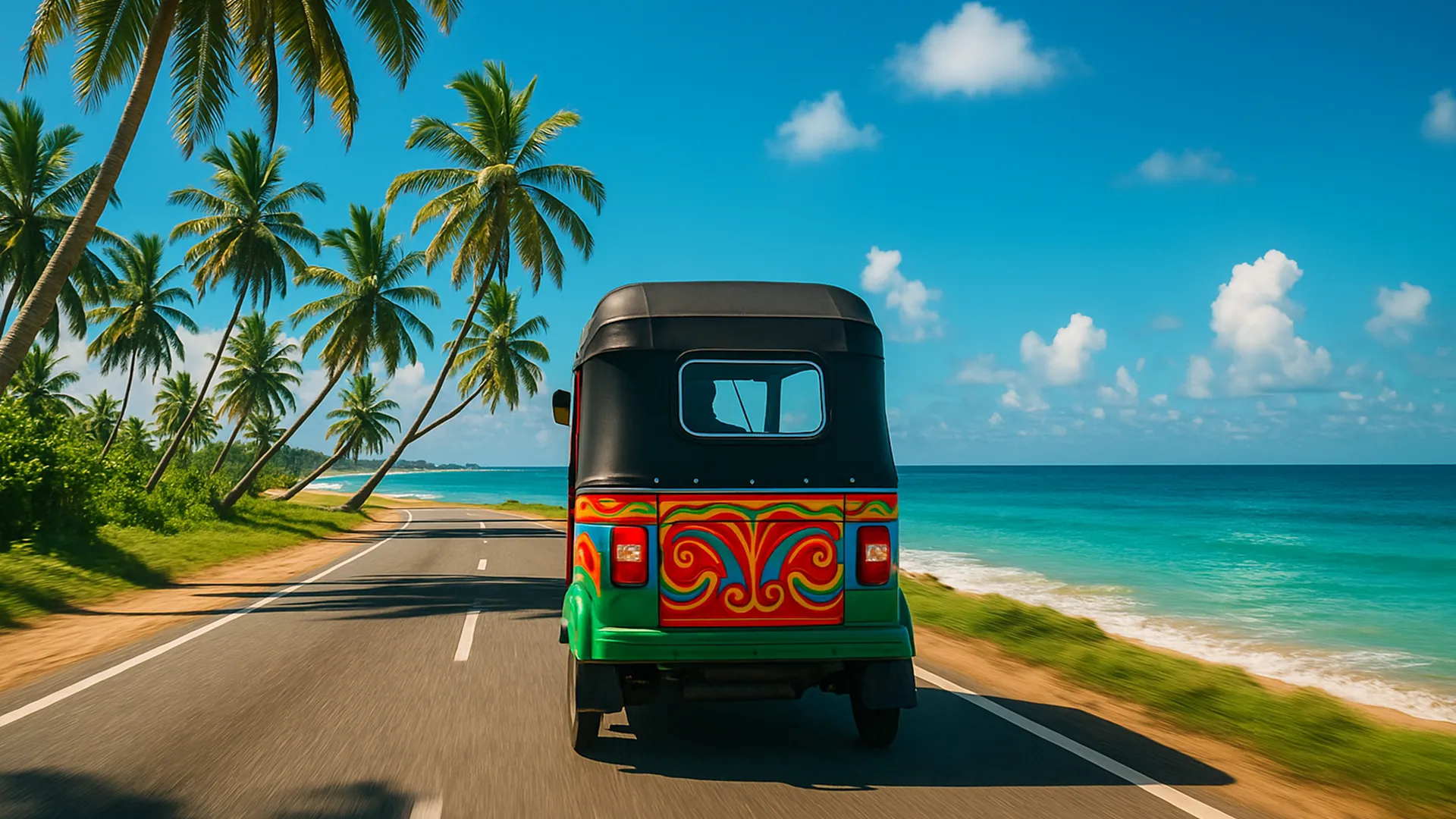
No vehicle is more synonymous with Sri Lanka than the humble, buzzing, gloriously colorful auto-rickshaw, universally known as the tuk-tuk. It’s the bloodstream of the nation, zipping through crowded cities, puttering down rural lanes, and lining up on every beachfront. For most tourists, it’s a cheap taxi. But for the truly adventurous, hiring your own tuk-tuk for a multi-day journey along the coastline is the ultimate way to embrace the slow, sensory, and wonderfully chaotic rhythm of Sri Lankan travel.
The adventure begins with the rental itself. You’ll find guesthouses and dedicated rental shops in tourist hubs like Negombo, Hikkaduwa, or Mirissa, offering tuk-tuks for daily or weekly hire. They’ll give you a brief overview of the controls - which is essentially an accelerator, a brake, and a handlebar to steer - and a pat on the back. It’s astoundingly simple to drive. The maximum speed is low (which is a safety feature in disguise), and its small size makes it incredibly agile. Packing is an art form. You must travel light. A couple of backpacks are all you can fit in the footwell or strap to the roof. This enforced minimalism is liberating.
Driving a tuk-tuk is a full-body experience. You are not sealed off from the world in an air-conditioned bubble. You are in it. You feel the warmth of the sun, the coolness of the evening breeze, and the occasional splash of a puddle. You smell the fragrant incense from temples, the pungent aroma of drying fish in fishing villages, and the sweet scent of frangipani flowers. You hear the full cacophony of life - the Bollywood music blasting from shops, the calls to prayer, the laughter of schoolchildren, and the constant, friendly toot of other tuk-tuks saying hello. It is immersive travel in its purest form.
The pace is gloriously slow. You are not going to break any land speed records. This slowness forces you to observe and absorb everything. You’ll wave to every smiling face you pass. You’ll get stuck behind a cart pulled by a majestic white bull and have to just slow down and enjoy the view. You’ll stop constantly - for a fresh coconut, to take a photo of a stunning bay, or to help push another traveler’s tuk-tuk out of a sandy ditch (a common bonding experience). The vehicle itself is a conversation starter. At every stop, curious locals will come to chat, asking where you’re from and where you’re going, often offering suggestions for places to see or eat.
A tuk-tuk road trip down the south coast, from Galle to Tangalla or beyond, is a perfect route. The distances between towns are short, the roads are (mostly) good, and there are countless beaches to discover along the way. You can follow the coast, dipping down tiny side roads that lead to hidden coves and fishing villages that big tour buses could never access. Your tuk-tuk is your ticket to freedom and your accommodation for the night. When you see a place you love, you simply find a guesthouse and stop. There’s no schedule to keep. It’s a journey that rewards curiosity and a willingness to embrace the unexpected. You’ll end each day dusty, sun-kissed, and buzzing from the vibration of the engine, but filled with an incredible sense of accomplishment and a collection of stories that you simply couldn’t get any other way. It’s not just a drive; it’s a rite of passage.
Powered by Froala Editor
September 18th 2025
Behind the Wheel: Navigating the Rules, Rituals, and Realities of Driving in Sri Lanka
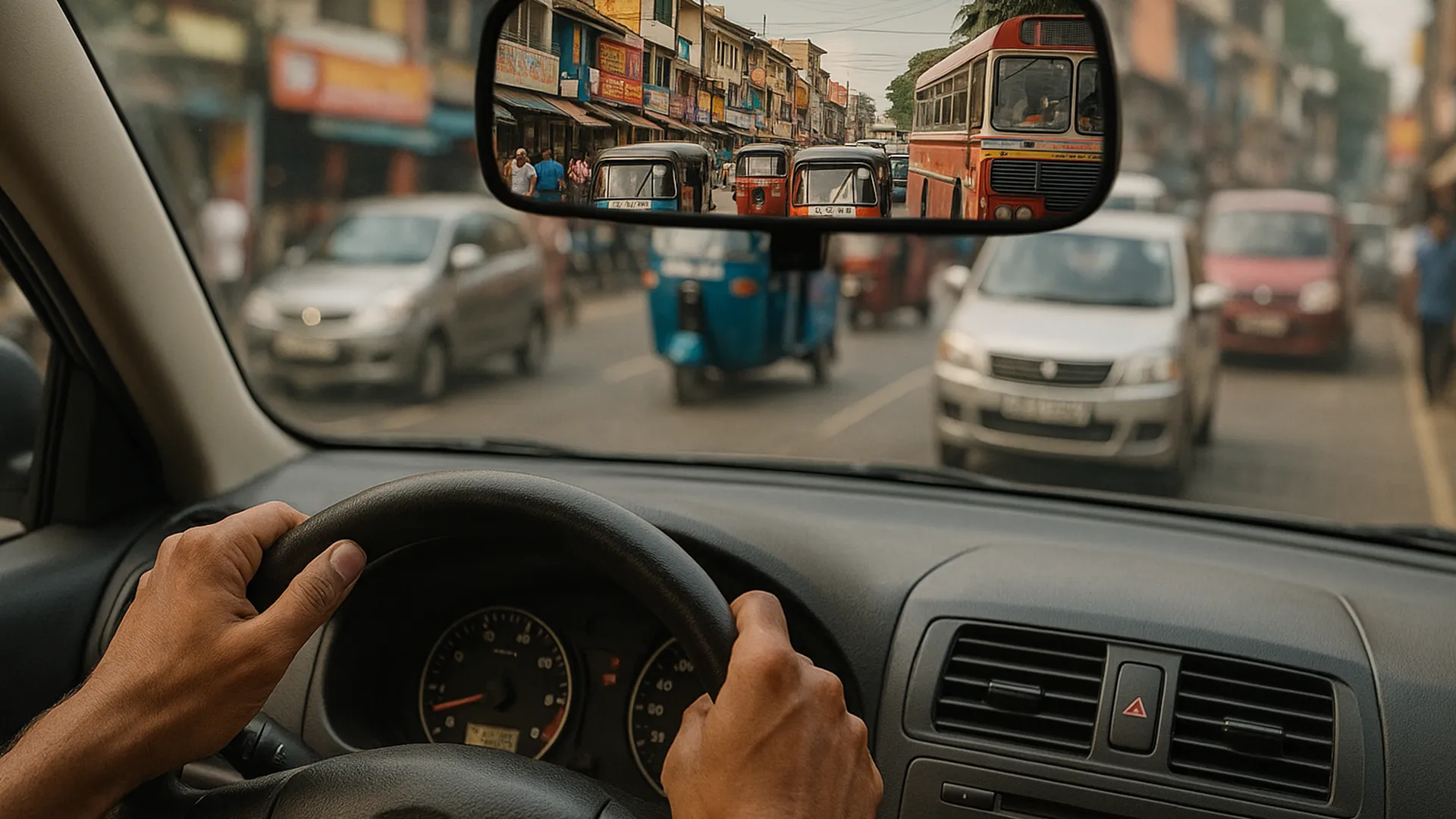
The decision to self-drive in a foreign country is a bold one, filled with visions of freedom but also tinged with apprehension. In Sri Lanka, both the dream and the challenge are very real. Driving here is a vibrant, chaotic, and uniquely organized ballet that operates on its own set of rules. Understanding these unwritten codes and practical realities is the key to transforming a potentially stressful experience into a confident and enjoyable adventure.
The formalities come first. To drive legally in Sri Lanka, you must have an International Driving Permit (IDP) alongside your valid driver's license from your home country. Car rental companies will require both. It is absolutely non-negotiable, and your insurance is void without it. When you pick up your vehicle, inspect it thoroughly. Note every single scratch, dent, and imperfection on the rental agreement before you drive away. Check the tire tread, the spare tire, and that all lights and indicators work. Take photos and videos of the car’s condition from every angle. This protects you from any unfair claims upon return.
Now, for the driving itself. The number one rule: drive on the left. It sounds simple, but after a lifetime of driving on the right, it requires constant, conscious effort. A good trick is to put a small sticker on the top-left corner of your windshield as a reminder. The second most important piece of advice is to be exceptionally cautious when pulling out into traffic or at junctions. Right of way is often determined by size and assertiveness, not by road signs. The largest vehicle usually has the right of way. Expect the unexpected at all times. The road is a shared space for cars, buses, trucks, tuk-tuks, motorcycles, bicycles, pedestrians, dogs, cows, and occasionally monkeys. Watch for hand signals from tuk-tuk and motorcycle drivers - a waving left hand often means it’s okay to overtake them.
The rhythm of the road is set by the public buses. They are the kings of the asphalt, often driving assertively and overtaking on blind corners. The universal language for “I’m coming through” is a quick flash of the headlights. If you see this coming from behind, especially from a bus or truck, it’s best to gently slow down and move left to let them pass. Similarly, if you are overtaking, a quick toot of the horn is a common way to alert the driver in front. This is not considered rude; it’s a necessary safety communication.
Outside of the main cities, driving becomes a more pleasant experience. The roads winding through the hill country towards Ella or Nuwara Eliya are spectacularly beautiful, but also narrow and winding. Take your time, use your horn on blind corners, and pull over to let faster local vehicles pass. Within Colombo, driving is an advanced-level skill. The traffic is dense and unpredictable. Many visitors choose to pick up their rental car after they leave the city, using taxis or Uber (which operates here) to navigate the capital.
Finally, embrace the journey. Allow extra time for every trip. What looks like a 100-kilometer journey on a map might take three or four hours due to the winding roads, traffic, and inevitable stops for photos, tea, or to let a herd of cows pass. Have a reliable offline map downloaded (Google Maps or Maps.me), carry cash for toll roads and parking, and always keep a bottle of water and your sense of humor handy. Driving in Sri Lanka is not a task to be endured; it’s an activity to be experienced. It will make you a more alert, patient, and adaptable driver. And the stories you’ll tell about navigating a mountain road with a bus on one side and a 1000-foot drop on the other will be among the best souvenirs you bring home.
Powered by Froala Editor
September 18th 2025
Finding Your Stoke: The Ultimate Guide to Sri Lanka's Surf Camp Culture
There’s a rhythm to Sri Lanka that matches the pulse of the ocean. It’s a call that draws surfers from all over the world to its golden shores, where consistent waves, warm water, and a laid-back vibe create a surfer’s paradise. But for every seasoned charger, there are dozens of curious beginners, eager to stand up on a board for the first time. This is where the island’s vibrant surf camp culture thrives, offering more than just lessons; it offers a gateway into a lifestyle.
The first decision is where to plant your flag. Sri Lanka’s surf scene is neatly divided by monsoon seasons, offering a year-round season depending on which coast you choose. The southwest coast - home to hotspots like Hikkaduwa, Midigama, and Weligama - catches the swell from the Arabian Sea from November to April. Weligama Bay, with its long, gentle, rolling waves, is arguably one of the best beginner beaches on the planet. It’s a forgiving classroom where you can practice popping up time and again without the fear of a punishing wipeout. From around May to October, the action shifts to the east coast, centered around the iconic village of Arugam Bay. The waves here are generally more powerful and suited to intermediate and advanced surfers, with legendary breaks like Main Point and Whiskey Point offering long, barreling rides. However, beginner-friendly areas like Peanut Farm and Pottuvil Point also exist, making Arugam a great destination for mixed-ability groups.
The term "surf camp" can mean many things, and Sri Lanka offers the full spectrum. You have the classic, budget-conscious surf camps, often run by passionate local surfers. These are social hubs, focused on community, with shared accommodations, daily lessons, and a vibrant, energetic atmosphere. They are perfect for solo travelers and those looking to make new friends. At the other end are the luxury surf retreats. These offer high-end private villas, gourmet meals, yoga sessions overlooking the ocean, and often more personalized coaching. They focus on wellness and comfort, providing a rejuvenating escape. Then there are the specialized camps, like Surf and Yoga retreats, where days are split between riding waves and finding balance on the mat, or Adventure camps that mix surfing with safaris, hiking, and cultural trips to ancient sites.
A typical day at a surf camp is a beautiful routine. It starts early, often before the sun gets too strong, with a hearty breakfast of fruit, eggs, and hoppers to fuel the session. You’ll grab your board - usually a soft-top longboard for stability - and head to the beach with your instructor and the rest of the camp. The lesson begins on the sand, covering the basics of paddling, popping up, and stance. Then, it’s into the water. There’s nothing quite like the feeling of your instructor giving you a push into your first unbroken wave and the sudden, silent glide as you stand up and ride it all the way to the beach. It’s a burst of pure, unadulterated joy. The late mornings are for relaxing - napping in a hammock, reading a book, or getting a massage to soothe sore muscles. The evenings are for community, sharing stories of the day’s waves over a delicious Sri Lankan rice and curry feast, the sound of the ocean providing the constant soundtrack.
But a surf camp experience is about so much more than just surfing. It’s about immersion. It’s about learning to read the ocean, understanding the tides, and the wind. It’s about the respect you learn for the local surfers who have grown up with these waves. It’s about exploring the local area, perhaps renting a scooter to find a hidden beach or visiting a nearby temple. It’s about the spontaneous cricket match that breaks out on the beach at sunset. You leave with more than just a new skill; you leave with a new perspective, a connection to the ocean, and a tribe of people who shared that experience with you. Whether you’re a complete novice or looking to improve your technique, Sri Lanka’s surf camps provide the perfect, sun-drenched setting to find your stoke.
Powered by Froala Editor